
Most homeowners insurance policies cover water damage when it’s sudden and accidental, like a burst pipe, a failed water heater, or a washing machine supply line that lets go overnight. They generally do not cover damage from neglect, gradual leaks you should have caught, or flooding from outside the home, that last one needs a separate flood policy through the National Flood Insurance Program or a private flood carrier. The difference between “covered” and “denied” often comes down to how fast the water appeared and whether you can show you didn’t ignore a known problem.
Sudden vs. Gradual: The Line Insurers Actually Draw
Policies are written around the word “sudden.” A supply line that bursts behind the washing machine at 2 a.m. and soaks the laundry room and the kitchen below it: covered. A slow drip under the same washing machine that’s been staining the subfloor for eight months before anyone noticed: likely denied, because insurers treat that as a maintenance issue the homeowner should have caught.
This distinction matters a lot in older housing stock, which is common throughout central Maryland. Homes built before the 1980s may still have original galvanized supply lines or cast iron drain stacks, both of which corrode from the inside and fail gradually rather than all at once. If an adjuster can trace the damage back to a slow, long-term leak, that’s the scenario most likely to get flagged as excluded.
What’s Typically Covered
- A pipe that bursts from freezing, water hammer, or age-related failure
- A water heater tank that ruptures
- An appliance supply line (dishwasher, washing machine, ice maker) that fails suddenly
- Roof or window leaks from a covered storm event, if the roof itself wasn’t already failing
- Accidental overflow from a toilet, tub, or sink
- Resulting damage to drywall, flooring, and personal property from any of the above
What’s Typically Not Covered
- Flooding from rising groundwater, storm surge, or a overflowing creek or stream (this needs a separate flood policy)
- Sewer or drain backups, unless you’ve purchased a sewer backup endorsement, which many policies offer as an add-on
- Damage from a leak you knew about and didn’t repair
- Gradual seepage through a foundation or basement wall over time
- Damage traced to poor maintenance, like a roof that was already past its useful life
If you’re not sure which bucket your situation falls into, that’s a reasonable thing to ask your agent before you ever need to file a claim. Knowing now whether you have a sewer backup rider, for instance, is a lot more useful than finding out the day your basement floor drain backs up.
What to Do in the First Few Hours
- Stop the source if you can. Shut off the main water valve or the fixture’s local shutoff. You can’t dry a space that’s still actively flooding.
- Take photos and video before you touch anything. Insurers want to see the damage as it happened, not after you’ve already started cleanup. Wide shots of the room, close-ups of the source, and anything damaged.
- Call your insurance company to open a claim. Most carriers have a claims line that’s answered around the clock. Get a claim number and the adjuster’s contact info.
- Start mitigating further damage. Most policies actually require you to take reasonable steps to prevent the loss from getting worse, moving furniture off wet carpet, mopping up standing water, running a dehumidifier if you have one. This isn’t optional; failing to mitigate can give an insurer grounds to reduce a payout.
- Keep damaged materials until the adjuster has seen them, or at minimum until you’ve photographed them thoroughly, if you’re on a tight timeline and need to start demo.
Mistakes That Can Cost You the Claim
- Waiting to report it. Most policies have a “prompt notice” requirement. Waiting a week because you’re hoping it’s not a big deal gives the insurer an opening to question the timeline.
- Throwing out damaged items before documenting them. Once it’s in the dumpster, it’s your word against theirs on what it was worth.
- Drying it yourself with fans and hoping for the best. Surface-dry isn’t the same as actually dry. Water that’s wicked up into drywall, insulation, or subfloor can stay wet for days behind a surface that feels fine to the touch, and that’s exactly the condition mold needs to start colonizing, often within 24 to 48 hours.
- Assuming verbal reassurance from an adjuster is a guarantee. Get coverage decisions in writing before you assume a repair or replacement is approved.
- Skipping moisture readings. Materials dried per the IICRC S500 standard are measured with meters, not guesswork. If a contractor tells you something is dry without measuring it, ask how they know.
When to Call a Restoration Professional
If the water touched more than a small, contained area, soaked carpet or carpet pad, got behind baseboards, or reached a finished basement, it’s worth having a water damage restoration company assess it rather than relying on box fans and an open window. Water finds gaps you can’t see: under subflooring, inside wall cavities, beneath cabinet toe-kicks. A moisture map with a meter tells you where it actually traveled, not just where it looked wet.
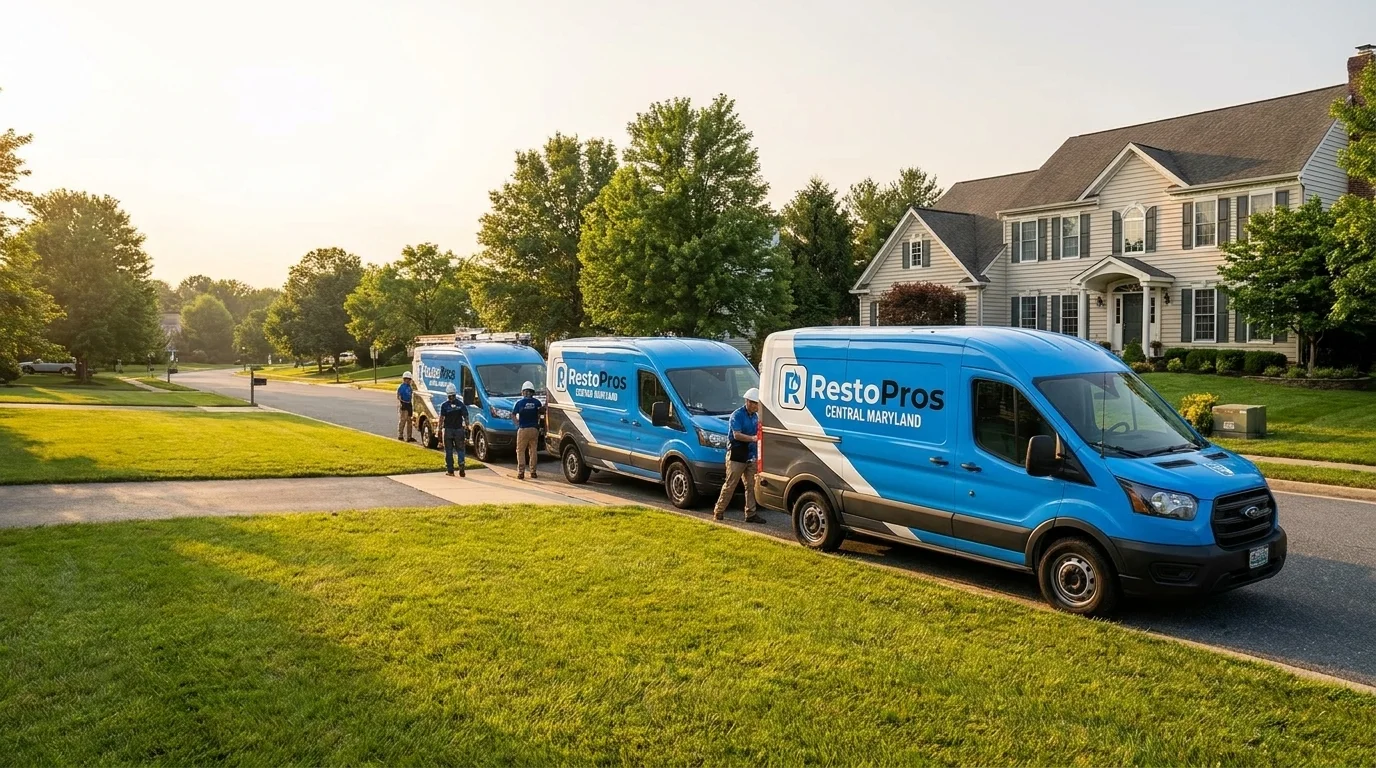
This also matters for your claim. Documentation from a restoration company, moisture readings, photos, drying logs, gives your insurer the kind of evidence that supports a claim instead of inviting questions about it. RestoPros of Central Maryland can assess the affected area, document the loss, and start the drying process so the claim and the repair move forward together instead of one waiting on the other.
The Recovery Timeline, Realistically
Once the source is stopped and extraction is done, expect structural drying to take several days, not hours, especially if water got into wall cavities or under flooring. Equipment stays in place and gets monitored with daily moisture checks until readings confirm the materials are back to a normal range. Only after that does reconstruction, drywall, flooring, trim, start. Rushing this step is how homeowners end up with a repainted wall over a stud that’s still damp.
If you’re staring at a fresh water stain on the ceiling or standing water in the basement right now, the first call matters more than the paperwork. Document what you can, shut off the source, and get in touch with your insurer and a restoration crew in parallel rather than waiting on one before starting the other. If you’re in central Maryland and need an assessment, RestoPros of Central Maryland can be reached at (240) 261-1639.