
Mold Remediation in Rockville
24/7 mold remediation in Rockville and surrounding areas. IICRC-certified, insurance billing accepted. Call (240) 261-1639.
A musty smell in the basement that comes back no matter how many times you run a dehumidifier. Dark speckling creeping along a bathroom ceiling after a slow roof leak. A finished basement that smelled fine in March and reeks of mildew by July. These are the calls we get most in Rockville, where humid Mid-Atlantic summers and older basement construction create ideal conditions for mold colonies to establish within 24 to 48 hours of a moisture event, often behind walls or under flooring where nobody’s looking until the smell gives it away.
What mold remediation actually involves
Mold remediation is not the same job as a surface cleaning with bleach. Once colonization has spread past a small, isolated spot, the work involves isolating the affected area, physically removing porous materials that have absorbed spores (drywall, insulation, carpet padding, sometimes subfloor), and treating the remaining structure so the colony doesn’t return once the humidity shifts again. The scope depends heavily on how long the moisture source went unaddressed. A leak caught within a day or two might mean cutting out a few feet of drywall. A slow leak that ran for weeks behind a tub surround or under a kitchen cabinet can mean removing framing members and running air scrubbers for several days before the space is ready to close back up.
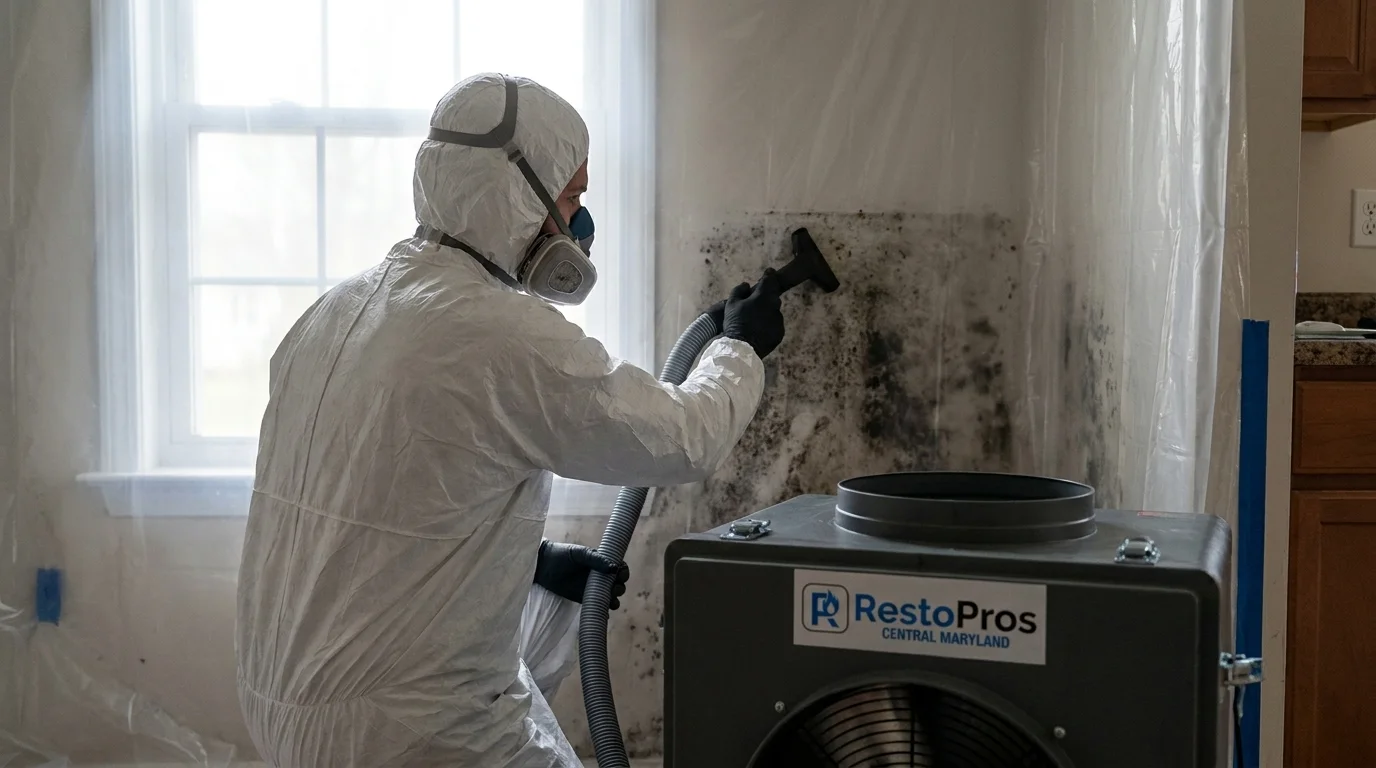
Equipment on a typical job includes negative air machines, HEPA-filtered air scrubbers, physical containment barriers (poly sheeting, zipper doors, tape), and moisture meters to confirm the underlying source is actually dry before any rebuild starts. Timeline runs anywhere from a single day for a small, contained bathroom ceiling spot to a week or more for a basement with extensive wall and flooring involvement.
Our process
- Inspection and scope. We identify the moisture source, assess how far the colony has spread (visually and with moisture meters), and determine whether the affected square footage calls for limited containment or full isolation under IICRC S520 guidelines.
- Containment setup. Poly sheeting and negative air pressure isolate the work area from the rest of the home so spores don’t travel into HVAC returns or adjacent rooms during removal.
- Material removal. Porous materials that have absorbed mold, drywall, insulation, carpet, baseboard, are removed and bagged for disposal rather than cleaned, since porous materials rarely come fully clean once colonized.
- HEPA filtration and surface treatment. Air scrubbers run continuously through the removal and drying phase, and remaining structural surfaces are treated with an antimicrobial agent before anything new goes back in.
- Clearance and documentation. Once visible mold is gone and the space has dried to target moisture levels, we document the work with photos for your insurance file. When the job calls for clearance testing, the independent hygienist performs it, not us.
What separates a good mold remediation response from a bad one
The most common mistake we see from less experienced operators is treating mold as a cleaning problem instead of a moisture problem. Spraying bleach on a visible patch without finding and fixing the leak behind it just buys a few months before the colony comes back, often worse, because the underlying material stayed wet the whole time.
Another frequent miss is skipping containment on jobs that look small. Disturbing a colonized surface without negative air pressure can push spore counts up throughout the house, which is exactly what a hygienist’s follow-up air test will catch. Insurance adjusters reviewing a mold claim generally want to see documented moisture readings before and after, photos of the affected materials, and a clear link between a covered water event and the resulting growth, since mold from long-term neglect or unresolved maintenance issues is typically excluded.
What does mold remediation cost?
Costs vary widely based on how much material has to come out and how long the moisture source went unaddressed, so every job gets a written scope before work starts rather than a phone estimate. Homeowners insurance typically covers mold remediation when it results directly from a covered water event, like a burst pipe, but usually excludes mold from long-term humidity or deferred maintenance, so it’s worth checking your policy language.
| Scenario | Typical range |
|---|---|
| Small bathroom ceiling or wall spot | $500 - $1,500 |
| Single room, limited drywall removal | $1,500 - $3,500 |
| Basement mold following a water event | $3,000 - $8,000 |
| Whole-house HVAC contamination | $6,000 - $10,000+ |
Testing and independent hygienists
We do not do the testing ourselves, because testing and remediating the same job is a conflict of interest. Following IICRC guidance and state and local rules on when testing is called for, we coordinate with a trusted independent environmental hygienist who tests the space and writes the protocol our remediation follows. We handle that communication and scheduling for you, and if you already have a hygienist you trust, we are happy to work with them instead.
Seasonal & regional considerations
Rockville’s humid summers push indoor relative humidity up fast, especially in below-grade spaces like basements and crawlspaces common in the area’s split-levels and colonials. Homes built before central air was standard often have less vapor barrier protection, which means a minor spring leak that goes unnoticed can turn into a full basement remediation by August. Winter brings a different risk: condensation around poorly insulated pipes and window wells, which creates the same slow, hidden moisture pattern in a smaller footprint.
Service area
We handle mold remediation throughout Rockville and the surrounding Central Maryland communities, including Gaithersburg, Bethesda, Silver Spring, and the rest of Montgomery County.
If you’re seeing spotting, smelling that persistent musty odor, or just found out about a leak that’s been running longer than you’d like, give us a call and we’ll walk the space with you before anything gets torn out.
Frequently Asked Questions
What level of mold remediation requires containment, and when is it optional?
Does homeowners insurance cover mold remediation?
How long does mold take to grow after a leak, and does that affect the remediation scope?
Can you clean mold off drywall instead of removing it?
Do you test for mold yourselves?
Looking for the best mold remediation company in Rockville?
RestoPros of Central Maryland provides mold remediation in Rockville, MD and the surrounding area. Customers rate us 4.9 out of 5 stars across 28 Google reviews. We answer calls 24/7 — call (240) 261-1639 for immediate help.
Need Mold Remediation now?
We respond 24/7 across Rockville and surrounding MD cities.
Related Coverage
- Our Restoration Services
- Contact RestoPros of Central Maryland
- Mold Remediation in Beltsville
- Mold Remediation in Bethesda
- Mold Remediation in Columbia
- Mold Remediation in Gaithersburg
- Mold Remediation in Glen Burnie
- Mold Remediation in Hyattsville
- Mold Remediation in Kensington
- Mold Remediation in Olney
- Mold Remediation in Silver Spring
- How To Choose a Restoration Company in Rockville (Without Getting Burned)
- How To Test for Mold in Your Home (DIY Kits vs a Pro Inspection)
- 7 Signs You Have Hidden Mold (and What To Do Next)