
24/7 Emergency Smoke Damage Restoration in Rockville
24/7 emergency smoke damage restoration in Rockville and surrounding areas. IICRC-certified, insurance billing accepted. Call (240) 261-1639.
Smoke damage emergency in Rockville? Call now for emergency service. We answer 24/7, and the sooner the air inside your home gets treated, the less time smoke residue has to etch itself into walls, cabinetry, and fabric.
Smoke doesn’t stay where the fire was. Within hours of a kitchen fire, an electrical fire, or even a neighboring wildfire event, soot particles travel through HVAC ducts and settle on surfaces two or three rooms away from the flame. Protein residue from a stovetop fire can turn a white ceiling yellow-brown almost overnight. That delay between the fire being out and the cleanup starting is exactly where permanent staining, metal corrosion, and lingering odor get locked in.
What smoke damage restoration actually involves
Smoke damage restoration is a different discipline from general fire cleanup. It targets the residue, particulate, and odor compounds left behind after flames are extinguished, whether the source was a contained house fire, a furnace malfunction, or drifting wildfire smoke that infiltrated the building envelope. The work covers hard surfaces (walls, ceilings, trim, cabinetry), HVAC systems that recirculated smoke through the home, and soft contents (upholstery, drapery, clothing) that absorbed odor-causing compounds.
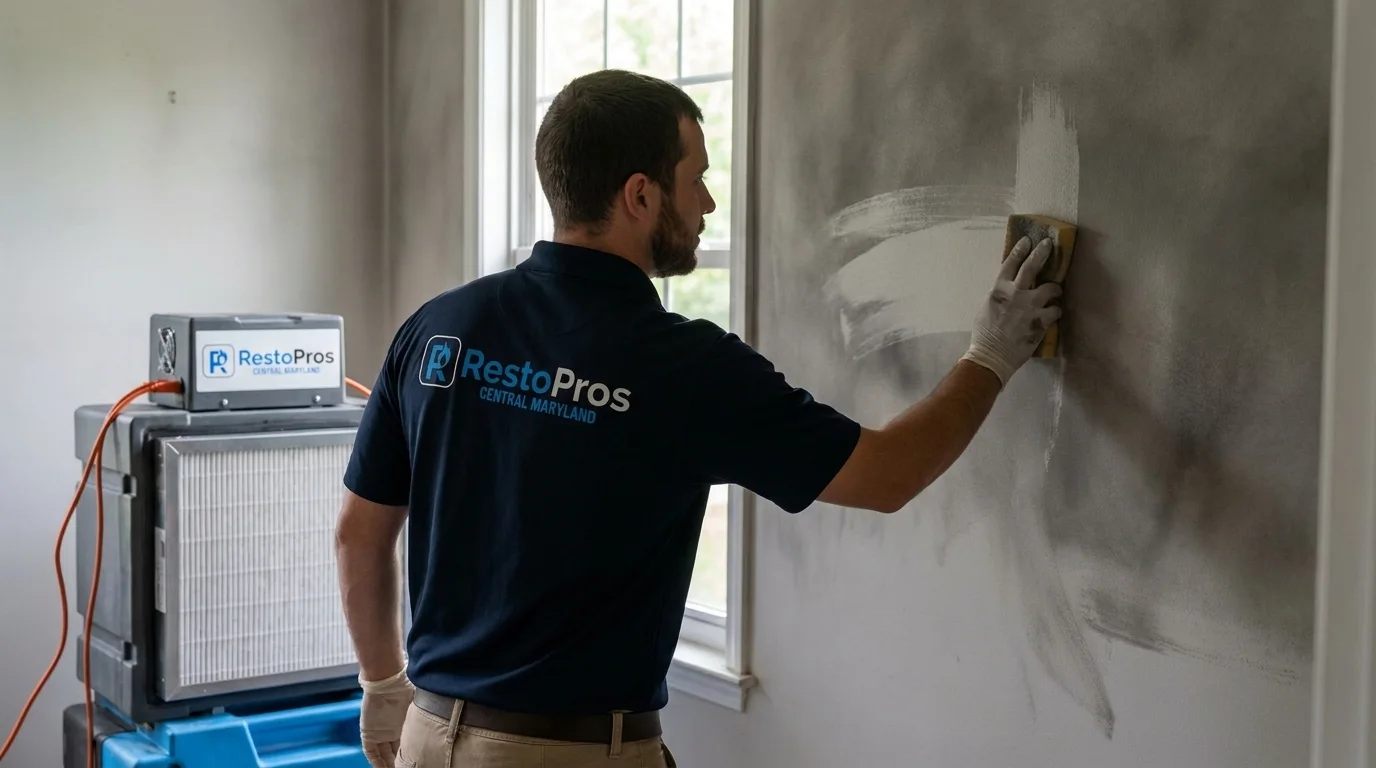
Equipment varies by soot type. Dry, powdery soot from a fast-burning wood fire responds to dry sponging and HEPA vacuuming. Wet, greasy protein soot from a kitchen fire requires solvent-based cleaning agents and more aggressive wall and cabinet treatment. Odor control typically layers thermal fogging or hydroxyl treatment on top of surface cleaning, since residue trapped in porous materials will keep off-gassing if it’s only wiped down rather than neutralized.
Our process
- Soot characterization. We identify whether the residue is dry, wet/protein, or fuel-based, since each type requires a different cleaning agent and sequence. Getting this wrong is the most common reason a surface looks clean but still smells like smoke a week later.
- Containment and HVAC isolation. Affected rooms get sealed off and the HVAC system is shut down or filtered to stop redistributing soot particles into unaffected areas of the house.
- Surface and content cleaning. Walls, ceilings, trim, and salvageable contents are cleaned using the method matched to the soot type, from dry chemical sponges to wet cleaning to abrasive methods for masonry or exterior surfaces.
- Odor neutralization. Thermal fogging or hydroxyl generators are used to break down odor compounds that have penetrated porous materials like drywall, insulation, and fabric rather than just masking the smell.
- Final inspection and documentation. Before we consider the job closed, we verify there’s no residual odor under varying temperature and humidity, since heat and moisture can reactivate smoke smell that wasn’t fully treated.
What separates a good smoke damage response from a bad one
The biggest mistake in smoke cleanup is treating it like a surface-cleaning job. Wiping down a wall with an all-purpose cleaner can smear soot deeper into the texture of the paint or push residue into grout lines and outlet covers where it keeps releasing odor. A good response identifies the soot type first and matches the chemistry to it.
The second common miss is ignoring the HVAC system. If ductwork and coils aren’t cleaned or filtered, every time the furnace or AC kicks on it recirculates the smell through rooms that were never near the fire. Adjusters who’ve handled fire claims before will often ask specifically whether the HVAC system was addressed, because callbacks for lingering odor are one of the more frequent disputes on fire-related claims.
Third, metal hardware, electronics, and appliance components corrode quickly after a fire because smoke residue is acidic. Delaying cleanup by even a few days can turn a cleanable hinge or fixture into one that needs replacement, which changes the scope and cost of the claim.
What does smoke damage restoration cost?
Costs vary widely depending on how much of the home was affected, the type of soot, and whether HVAC and contents cleaning are needed in addition to structural surfaces. Every loss is different, and RestoPros of Central Maryland provides a written scope of work before any cleaning begins so there are no surprises once the job is underway. Homeowners insurance typically covers smoke and soot damage from a covered fire event, including structural cleaning and often contents cleaning, though policy terms vary.
| Scenario | Typical range |
|---|---|
| Single room, light surface soot | $500 - $1,500 |
| Whole-room deep clean with odor treatment | $1,500 - $4,000 |
| Multi-room smoke spread with HVAC cleaning | $4,000 - $10,000 |
| Whole-house smoke and odor remediation | $10,000 - $25,000+ |
| Contents cleaning (furniture, fabrics, electronics) | Priced separately, often $1,000 - $5,000+ |
Seasonal & regional considerations
Maryland winters mean more furnace and space heater fires, and more closed-up homes where smoke has nowhere to escape and settles deeper into carpets and upholstery. Summer wildfire smoke drifting in from regional events can infiltrate homes through HVAC intake even without a fire on the property, leaving a hazy residue and odor that homeowners sometimes mistake for a dust or allergy issue rather than smoke infiltration.
Service area
We handle smoke damage restoration for homeowners in Rockville and throughout the surrounding Central Maryland area. Local housing stock ranges from older brick colonials with plaster walls that hold onto odor differently than drywall, to newer construction with HVAC systems that need more careful isolation during a fire event.
If smoke has moved through your home, don’t wait on the cleaning while you wait on an adjuster. Call RestoPros of Central Maryland to begin smoke and soot removal and get a documented scope started before residue sets in permanently.
Services We Handle
- Soot Removal
Frequently Asked Questions
Does homeowners insurance cover smoke damage restoration?
Why does my house still smell like smoke after I've cleaned the walls?
How is wildfire smoke cleanup different from house fire smoke cleanup?
Can smoke residue damage things that weren't near the fire?
What should I avoid doing before a smoke damage crew arrives?
Looking for the best smoke damage restoration company in Rockville?
RestoPros of Central Maryland provides smoke damage restoration in Rockville, MD and the surrounding area. Customers rate us 4.9 out of 5 stars across 28 Google reviews. We answer calls 24/7 — call (240) 261-1639 for immediate help.
Need Smoke Damage Restoration now?
We respond 24/7 across Rockville and surrounding MD cities.