
Water Leak Detection in Rockville
24/7 water leak detection in Rockville and surrounding areas. IICRC-certified, insurance billing accepted. Call (240) 261-1639.
A wet spot that won’t dry, a water bill that jumped for no obvious reason, or a musty smell behind a baseboard usually means water is moving somewhere it shouldn’t, and it’s been happening longer than the visible damage suggests. By the time a stain shows up on drywall or a floor starts to cup, the leak behind it may have been active for weeks. Water leak detection finds the source before it turns into a mold problem, a collapsed subfloor, or a slab that has to be opened up.
What water leak detection actually involves
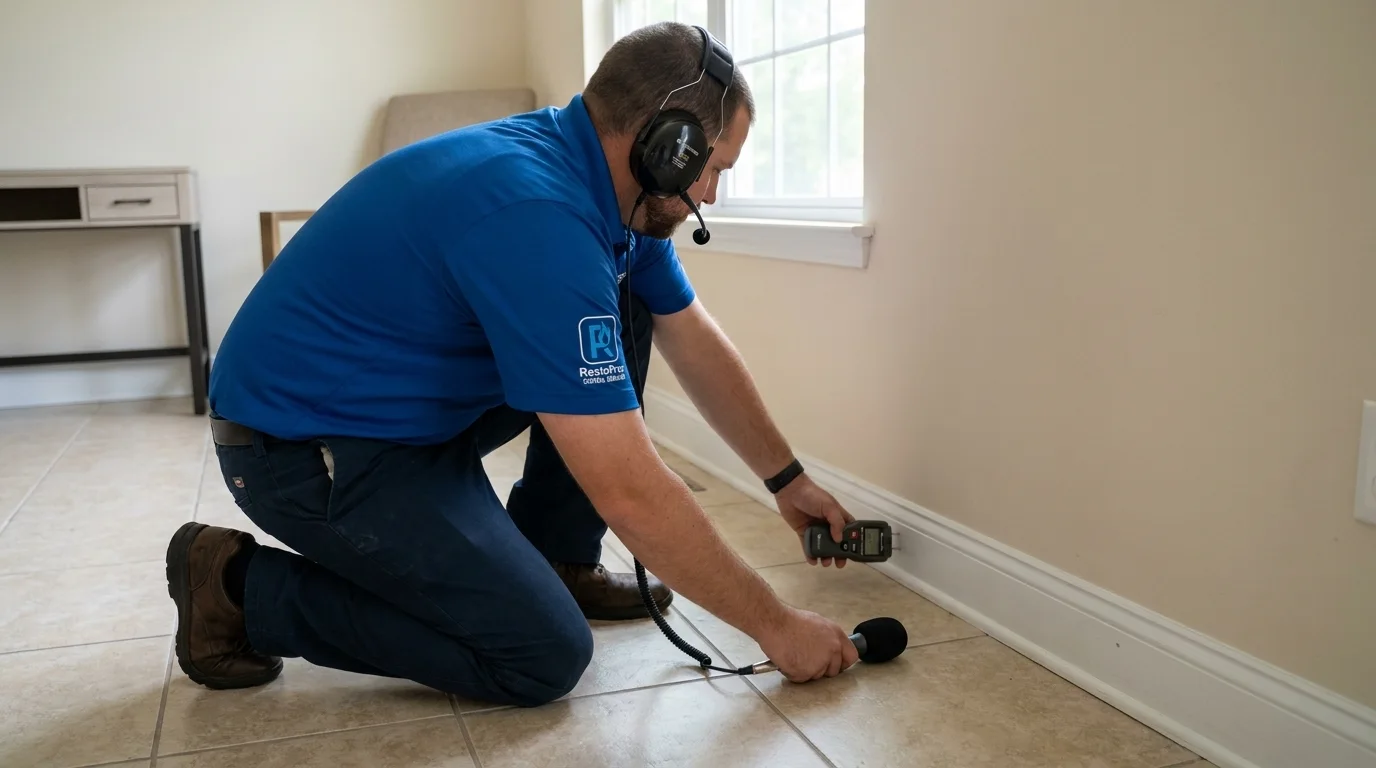
Finding a hidden water leak in a wall, ceiling, or under a slab isn’t guesswork, and it isn’t demolition either. Technicians use thermal imaging cameras to spot temperature differences where water is wicking through drywall or framing, moisture meters to confirm whether a reading is surface condensation or active saturation, and acoustic listening equipment to pick up the sound of water moving or hissing under pressure inside a pipe. For suspected slab leak detection, pressure testing on the water line isolates whether the leak is on the supply side or the drain side before anyone cuts into concrete. Most inspections take one to three hours depending on the size of the home and how many fixtures or zones need to be checked. Rockville’s housing stock runs from 1950s and 60s slab-on-grade ranches to newer construction with PEX plumbing, and the diagnostic approach changes depending on what’s actually in the walls.
Our process
- Symptom intake. We start with what you’ve noticed: water bill spikes, a sound under the floor, a soft spot in the carpet, or a smell that comes and goes. This narrows the search area before any equipment comes out.
- Non-invasive scanning. Thermal imaging and moisture meters map the affected area without opening walls, identifying how far moisture has traveled from the source.
- Acoustic and pressure testing. For leaks suspected in pressurized supply lines or under a slab, we isolate sections of the system and listen for the leak’s exact location rather than estimating.
- Pinpointing. Once the data points agree, we confirm the leak’s location, often within a small, specific area, so any necessary access cut is minimal and targeted.
- Written findings. You get a scope of what was found, where, and what it means for repair or further remediation, so you’re not left guessing what happens next.
What separates a good leak detection response from a bad one
A rushed diagnosis leads to a wall getting cut open in the wrong spot, or a repair that fixes one leak while a second moisture source behind it keeps feeding mold growth. Good leak detection checks for secondary pathways, water that traveled along a joist or down a stud bay before pooling somewhere else entirely, not just the spot where the stain is visible. It also distinguishes between a plumbing supply leak, a drain leak, condensation from an HVAC line, and groundwater intrusion through a slab, because each one gets handled differently and insurance treats them differently too. Adjusters generally want documented moisture readings, thermal images, and a clear written explanation of the leak’s origin, not just a repair invoice, so thorough documentation at this stage matters if a claim is involved.
What does water leak detection cost?
Costs vary with how many areas need to be checked, whether the leak is in an accessible wall versus under a concrete slab, and whether pressure testing is required on top of standard scanning. These are typical industry ranges, not a quote; every property is different, and RestoPros of Central Maryland provides a written scope before any work begins. Homeowners insurance often covers the cost of locating a leak when it’s tied to a covered water damage claim, but routine inspections without active damage are typically out of pocket.
| Scenario | Typical range |
|---|---|
| Single-area inspection, visible moisture | $200 - $450 |
| Whole-house leak inspection, multiple zones | $400 - $800 |
| Slab leak detection with pressure testing | $450 - $950 |
| Leak detection paired with moisture mapping for an insurance claim | $500 - $1,100 |
| Multi-story home, hard-to-access plumbing runs | $600 - $1,300 |
Seasonal & regional considerations
Winter freeze-thaw cycles are a common trigger for hidden leaks across central Maryland, as pipes that partially freeze can develop pinhole leaks that don’t show up until a thaw sends water through a wall cavity. In summer, condensate lines from air conditioning units are a frequent and overlooked source of what looks like a plumbing leak but isn’t. Rockville’s older slab-on-grade neighborhoods see more slab leak calls, since copper supply lines run under the concrete in many homes built before PEX became standard, and those lines corrode with age.
Service area
RestoPros of Central Maryland provides water leak detection throughout Rockville and surrounding communities including Gaithersburg, Bethesda, Silver Spring, and Germantown.
If something in your home feels off, a water bill that doesn’t add up, a smell you can’t place, or a spot on the ceiling that keeps coming back, schedule a leak detection inspection before it turns into a bigger repair.
Frequently Asked Questions
Does homeowners insurance cover water leak detection?
How do you find a leak without tearing out my walls?
What is slab leak detection and how is it different from a regular leak check?
How long does a leak detection inspection take?
What are the signs of a hidden water leak I should watch for?
Looking for the best water leak detection company in Rockville?
RestoPros of Central Maryland provides water leak detection in Rockville, MD and the surrounding area. Customers rate us 4.9 out of 5 stars across 28 Google reviews. We answer calls 24/7 — call (240) 261-1639 for immediate help.
Need Water Leak Detection now?
We respond 24/7 across Rockville and surrounding MD cities.