
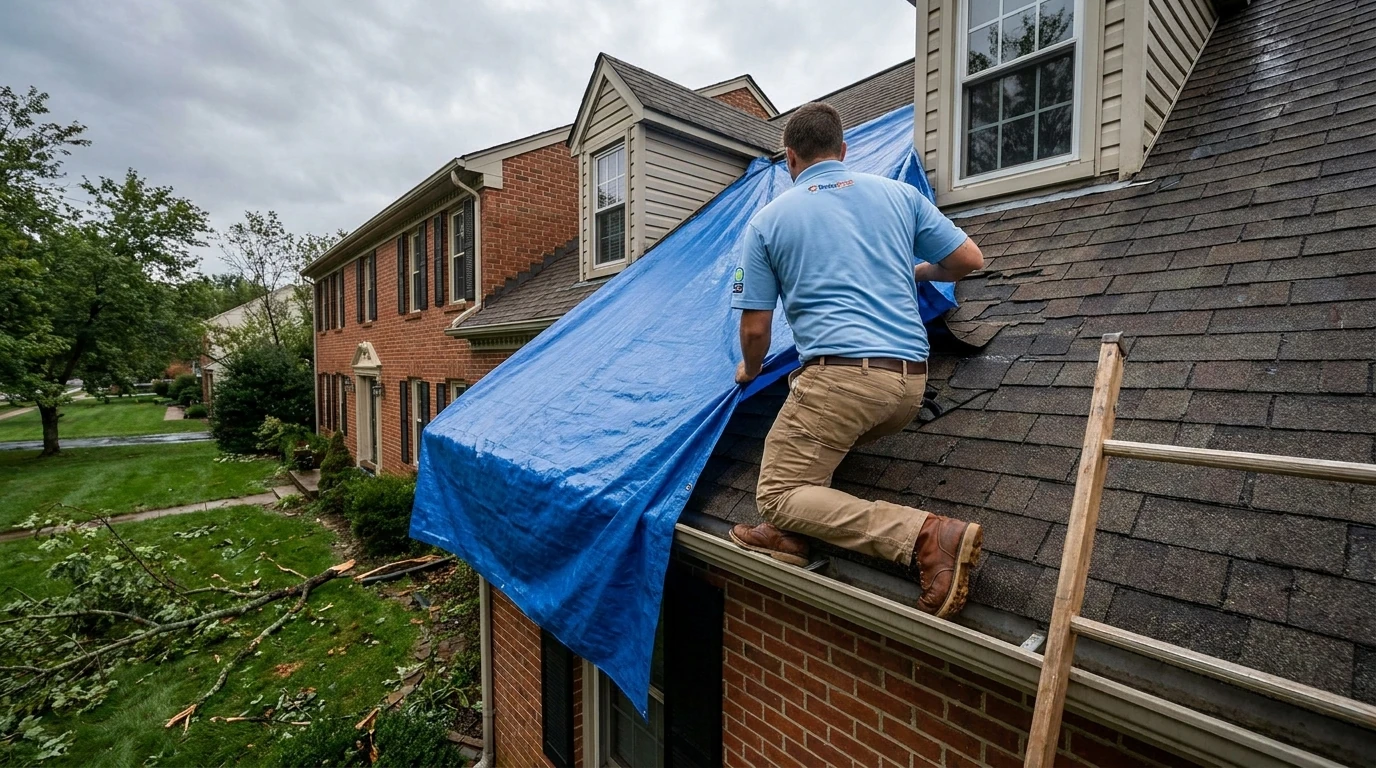
TL;DR: After high winds or a storm with hail or falling limbs, water usually finds its way into the house within hours through a compromised roof, siding, or window. Get the property safe, tarp or board any openings, and call a storm damage restoration company before standing water or trapped moisture turns into a mold problem. Document damage with photos first, then start the insurance claim once mitigation is already underway.
If a storm just rolled through Montgomery County and a tree limb punched a hole in your roof, or wind peeled back a section of shingles over the bedroom, you’re probably standing in the house right now wondering what to touch first and what to leave alone for the adjuster. The honest answer: stop the water intrusion first, document second, and bring in a restoration crew before the drywall and insulation absorb more moisture than they can shed on their own.
What counts as storm and wind damage restoration?
Storm and wind damage restoration covers the repair and drying work needed after high winds, hail, or falling debris breach a building’s exterior, whether that’s a torn-off section of roofing, a cracked window, siding ripped loose, or a tree limb through the attic. It’s a distinct service from general water damage restoration because the first job is sealing the building envelope, not just drying it out.
In practice that means two things happen close together: emergency tarping or board-up to stop more wind and rain from getting in, and water mitigation for anything that already got inside. A wind event rarely damages just one system. Roof damage often means attic insulation and ceiling drywall are wet by the time anyone notices the leak, and a broken window usually means a soaked windowsill, carpet, and sometimes drywall below it.
What should I do in the first few hours after a storm hits my home?
Check for immediate safety hazards first, downed power lines, a sagging ceiling, or a tree resting on the structure, and stay out of any room where the ceiling looks swollen or is actively dripping. Once the property is safe to walk through, the priority order is: photograph the damage, stop the water from getting worse, and then call for help.
A few concrete steps that actually matter in the first hours:
- Photograph everything before you move anything. Wide shots of each damaged room plus close-ups of the roof, siding, or broken window from outside if it’s safe to get that angle.
- Place buckets or towels under active leaks, but don’t attempt roof repairs yourself in wind or on a wet roof.
- Move furniture and electronics away from the wet area if you can do it safely.
- Call a restoration company for emergency tarping or board-up, not a general contractor, if the opening is large. This is RestoPros’ first call type for a reason: sealing the envelope within the first day keeps a roof leak from becoming a full ceiling collapse or a mold colonization inside wall cavities.
- Don’t throw away damaged materials yet, the adjuster will want to see them, or at minimum photograph them before disposal.
Our burst pipe emergency checklist covers similar first-hour triage if the storm also knocked out power and a sump pump failed, which happens more than people expect during a bad wind event.
Will homeowners insurance cover storm and wind damage?
Most Maryland homeowners policies cover sudden wind and hail damage to the dwelling, including a tree falling on the roof, but they typically exclude flood water that rises from outside the home, which requires separate flood coverage. The distinction matters because wind-driven rain that gets in through a damaged roof is usually covered as wind damage, while water that backs up from a storm drain or overflowing creek is usually not covered under a standard policy.
Documentation is what makes or breaks these claims. Insurers want to see the damage before cleanup started, a record of when the storm occurred, and in some cases a weather report tying the loss to a specific date. Our guide on whether homeowners insurance covers water damage walks through the gradual-versus-sudden distinction in more detail, which applies directly here: a roof that failed suddenly during a named windstorm is a very different claim than a roof that’s been slowly leaking for a year and finally gave out during a storm.
One Maryland-specific note: some policies apply a separate, higher deductible for wind and hail losses than for other perils. Check your declarations page before assuming your standard deductible applies. The National Weather Service and NOAA archive storm event data by date and county, which can help support a claim if your insurer asks for independent confirmation that a wind event occurred.
What does the wind damage restoration process actually look like?
The process runs in roughly four stages: stabilize the structure, extract and dry anything wet, document the damage for your claim, and coordinate repairs. Each stage has to happen in order, because drying out a room while rain is still blowing through a tarp-free hole is wasted effort.
- Emergency stabilization. Tarping over roof damage, boarding up broken windows or doors, and securing loose siding to stop further intrusion.
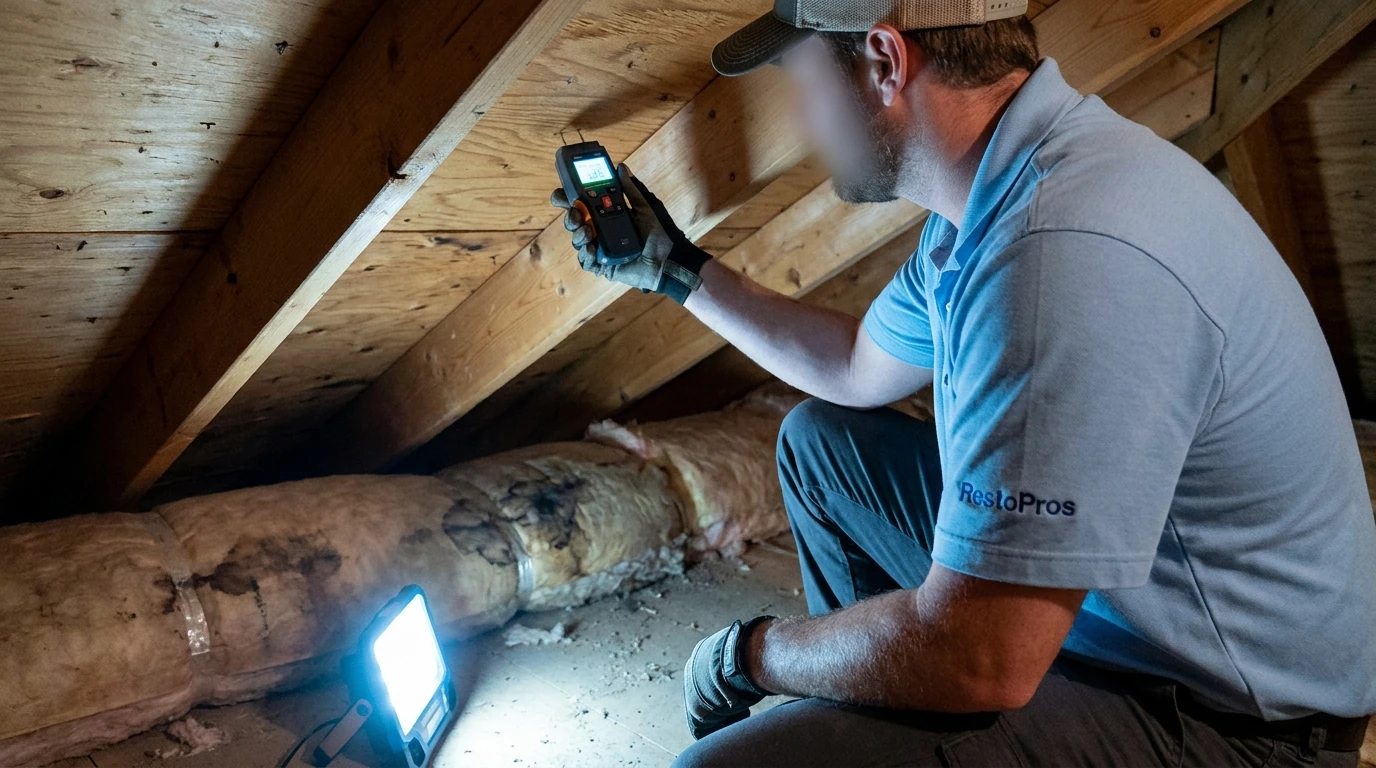
- Water extraction and structural drying. If water got into the building, extraction equipment removes standing water and air movers plus dehumidifiers dry the structure to a stable moisture content, generally following the IICRC S500 standard for water damage restoration.
- Damage documentation. Moisture readings, photos, and a written scope of work that your insurance adjuster can reference directly.
- Repairs and reconstruction coordination. Roofing, drywall, insulation, and flooring repairs, handled either directly or coordinated with your roofer and contractor so nothing gets rebuilt over a surface that’s still wet underneath.
Skipping step two is the most common mistake homeowners make after a storm. A roof gets patched or re-shingled quickly, but the insulation and drywall underneath stay damp for weeks, and by the time anyone notices a musty smell, mold has already colonized the wall cavity.
What should I do next?
If your roof, siding, or windows took wind damage in the last day or two, the first call should be for emergency tarping and a moisture assessment, not a roofing quote. Getting the structure dry and documented protects both the building and the insurance claim. If you’re still deciding who to call, our piece on choosing a restoration company covers what to check before anyone starts cutting into your drywall.
RestoPros of Central Maryland handles the full arc of a storm loss, from emergency board-up through structural drying and documentation, and our crews answer the phone 24/7 across Rockville and Montgomery County. Call RestoPros of Central Maryland at (240) 261-1639 to get a tarp on the roof and a moisture assessment started today.
About RestoPros of Central Maryland
RestoPros of Central Maryland is a restoration company with IICRC WRT (Water) trained technicians, serving Rockville, Silver Spring, Bethesda, Gaithersburg, Columbia, and the surrounding Montgomery, Prince George’s, Howard, and Anne Arundel County communities. The company is licensed and insured, answers calls 24/7, and holds a 4.9 Google rating across 28 reviews. This guide was prepared with input from Daniel Restum and the RestoPros team, who handle storm, water, fire, mold, and sewage restoration work across Central Maryland.